
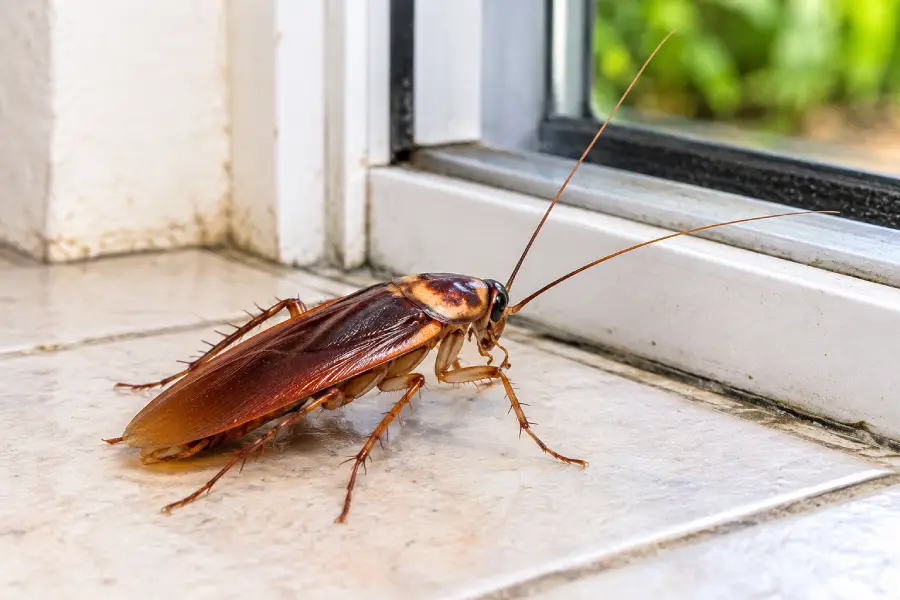
A big brown cockroach flying through your Brisbane home at night is often one of three look-alikes: the American, Australian or smoky brown cockroach. All three are roughly 30 to 40 mm long and live mostly outdoors, and the American and smoky brown can fly short distances in warm weather. Yellow markings along the Australian cockroach’s wing edges can help with identification, although colour alone is not enough to confirm the species. A clear photo or professional inspection can help identify the cockroach. Sealing entry points, clearing garden debris and addressing moisture sources can help reduce repeat activity.
This guide shows how to work out which one you have, why they come inside in Brisbane’s warm, humid weather and what actually keeps them out. It is about the large outdoor species. If you are seeing small cockroaches in the kitchen at night, that is usually a different problem, which we cover at the end.
Which big cockroach is it?
Colour and markings are the quickest check. Compare the cockroach with the table below, ideally once it has been caught in a jar or is sitting still.
| Feature | American | Australian | Smoky brown |
|---|---|---|---|
| Size | 35 to 40 mm, the largest common pest cockroach | About 35 mm | About 30 mm |
| Markings | Reddish-brown with a pale yellow border around the upper thorax and pale legs | Darkish brown with yellow markings on the upper thorax and the front edges of the forewings | Shiny dark brown to black with no pale markings |
| Where it lives | Warm, moist, dark places, mostly roof, wall and subfloor areas, sewers and rubbish areas | Mainly outdoors in shrubs, trees, woodpiles, bark and leaf litter, and sometimes moves into subfloor, wall and roof voids | Damp, dark, poorly ventilated areas such as sheds, roof and wall voids, subfloors, mulch and drains |
| Flying | Can fly short distances in warm conditions | Winged, but the source used does not say how much it flies | Flies short distances in warm weather and is often drawn to lights at night |
Sizes, markings and habits above come from the Victorian Department of Health. NSW Health also notes that the American cockroach grows to around 40 mm and will fly in warm conditions. You can compare photos on our pest library pages for the American cockroach, Australian cockroach and smoky brown cockroach.
Two more points help. The smoky brown cockroach rarely infests living areas, so a big cockroach inside the house is more likely to be an American or Australian one. And the Australian Museum notes that the fast, shiny black or brown cockroaches found in homes are almost never native species. Native bush cockroaches are not a serious pest, so a cockroach in the garden is not automatically a problem.
Why they fly in at night
These cockroaches rest in dark, sheltered spots during the day and move about at night. In warm weather they will fly, and bright lights near doors and windows draw them towards the house. A cockroach that lands on you or the wall is often a stray from the garden, roof void or subfloor. One sighting alone is not proof that there is a colony in your kitchen.
Brisbane’s climate is a big part of this. The Victorian Department of Health notes that the Australian cockroach lives mainly outdoors in warm sub-tropical to tropical areas, and that American cockroaches live outdoors in warm regions. Warm nights and humidity keep them active for much longer than in cooler cities.
Where they come from around a Brisbane home
- Roof void and subfloor. Many Brisbane homes, especially older raised Queenslanders, have both. American, Australian and smoky brown cockroaches are all recorded in roof, wall or subfloor areas.
- Trees, shrubs and leaf litter. Australian cockroaches shelter in shrubs, trees, woodpiles, bark and leaf litter, so a thick garden bed beside the wall is a likely source.
- Drains, mulch and rubbish areas. Damp mulch, open drains and bins give them shelter and moisture.
- Gaps around pipes, doors and eaves. This is how they move from outside to the kitchen, laundry and bathrooms.
How to keep them out
- Seal the gaps. Close gaps around pipes, under doors and at eaves. Fit door seals and check that flyscreens have no holes.
- Cut the shelter. Clear leaf litter, keep mulch back from the walls and trim shrubs and branches that touch the roof.
- Dry the damp spots. Fix leaking taps and clear gutters and drains so water does not pool near the house.
- Manage the outdoor lights. Move bright lights away from doors and windows, and close curtains at night so light does not spill outside.
- Store food and rubbish properly. Use lidded bins and sealed pet food containers, and take rubbish out each night.
- Check accessible entry points. Look for visible signs around accessible roof and subfloor entry points. If you suspect cockroaches are sheltering inside these spaces, arrange a professional inspection rather than entering unsafe or confined areas. Droppings, egg cases or lots of cockroaches there point to a harbourage that needs more than an indoor spray.
Why a quick spray often does not fix it
A spray inside kills the cockroach it touches. It rarely reaches the roof void, subfloor or garden where the others live, so new ones keep arriving. That is why our cockroach control in Brisbane starts with an inspection of where the cockroaches are sheltering, not only where they are seen. If the same cockroaches return each week during the warmer months, book an inspection with Tom’s Pest Control Brisbane rather than buying more spray. The summer pest control guide for Brisbane covers what else picks up in the heat.
When the problem is a different cockroach
Small cockroaches seen at night in the kitchen, behind appliances or in cupboards are usually German cockroaches. They live and breed indoors and are a different job. Our guide to German cockroach control explains the signs, and our cockroach identification library helps you check the species.
Quick answers about flying cockroaches
Do cockroaches fly in Brisbane?
Yes, some do. American and smoky brown cockroaches can fly short distances in warm weather, and the smoky brown is often drawn to lights at night. German cockroaches are the small indoor species and are not the type you see flying.
What is the big flying cockroach in Brisbane?
Most likely an American, Australian or smoky brown cockroach. Look for yellow markings, which point to the Australian cockroach.
Is a big cockroach inside a sign of an infestation?
Not always. A single cockroach is often one that has entered from outdoors, such as from the garden or roof void. Several in a week, or droppings and egg cases in the roof void or subfloor, point to a harbourage close to the house.
Are cockroaches in the garden always a pest?
No. Native bush cockroaches are not a serious pest. The big brown ones that come inside are usually introduced species, so identify it before you act.
Can I get Tom’s Pest Control Brisbane to inspect for outdoor cockroaches?
Yes. Book an inspection through our contact page and tell us where and when you see them.